




 Contact Now
Please Leave Us A Message
Privacy statement: Your privacy is very important to Us. Our company promises not to disclose your personal information to any external company with out your explicit permission.


XI'AN TAIMA BIOLOGICAL ENGINEERING CO.LTD
Product Description
1. What Are Caryophyllene oxide?
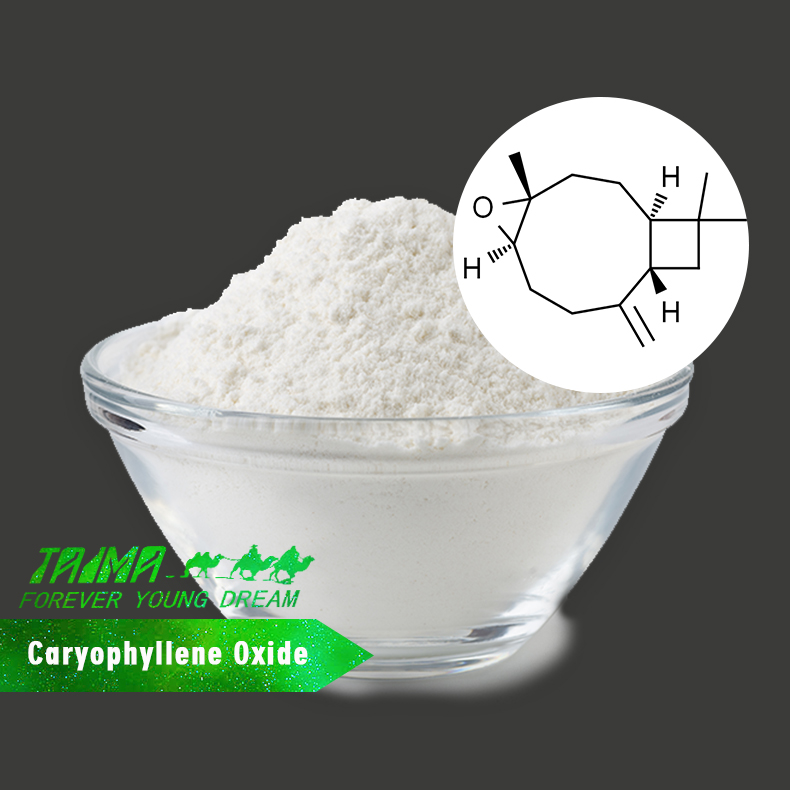
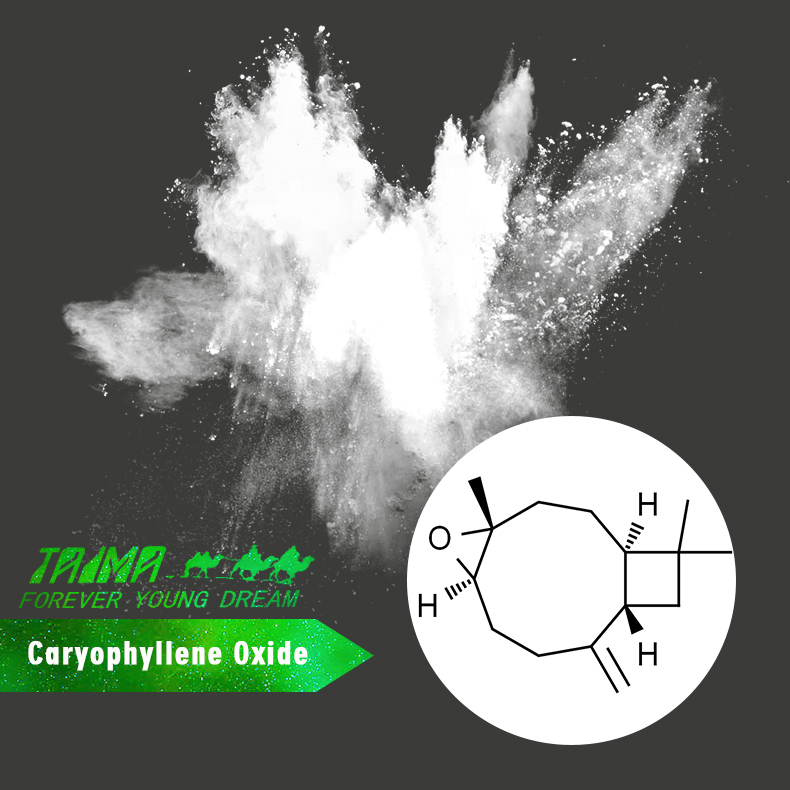
Caryophyllene oxide is a sesquiterpene or a terpene that results from the oxidation of beta-caryophyllene.
1. Chemical properties
Molecular formula : C15H24O, molecular weight 220.35, CAS number 1139-30-6, alias include caryophyllene oxide, caryophyllene, etc. .
Structure : belongs to the epoxy derivative, chemical name 4, 5-epoxy-4,11, 11-trimethyl-8-methylene bicyclic [7.2.0] undecane , containing the epoxy group .
2. Physical properties
Appearance : solid or liquid at room temperature (depending on purity).
Melting point : 55 -- 62°C, boiling point : 279.7°C (under atmospheric pressure), density : 0.98 g/cm³, flash point : 119.7°C1.
Solubility : soluble in chloroform, DMSO, methanol and other organic solvents.

Function
Many terpenes have similar benefits. However, we are in the infancy stages of understanding their full potential and their interactions. Caryophyllene Oxide has been identified to be beneficial as:
1. Anticoagulant
A recent study suggests that isolated Caryophyllene oxide showed significant anti-platelet aggregation activity, indicating it could potentially prevent coagulation of the blood (Yang, Millet-Clerc, Chaumont, & Michel, 1999).
2. Anticancer
Like many other terpenes, Carypohyllene can help potentiate anti-cancer drug efficacy. For example, it can enhance the chemotherapy drug doxorubicin in the treatment of intestinal cancer cells. Besides, combined with doxorubicin and paclitaxel shows anticancer activities on human leukemia, multiple myeloma, and human prostate cancer cell lines. In general, Caryophyllene has "equally strong (or even stronger) anticancer activity than [β-caryophyllene]." Further research is needed to determine if it prevents cell proliferation and induces apoptosis. ( Sain, S., 2014)
3. Antifungal
Caryophyllene Oxide is also known for its antifungal properties. When tested on nail and skin fungi, the terpene's antifungal activity is comparable to fungal treatment drugs, such as ciclopirox olamine and sulconazole (yang, Millet-Clerc, Chaumont, & michel, 1999).
4. Anti-Inflammatory
Another benefit of Caryophyllene Oxide is its analgesic and anti-inflammatory properties. Caryophyllene oxide combined with unsaponified petroleum ether extract showed significant central and peripheral analgesic, along with the anti-inflammatory activity. These activities of caryophyllene oxide were comparable with the standard drug used in the respective experiments(Javed, Azimullah, Haque, & Ojha, 2016).


Privacy statement: Your privacy is very important to Us. Our company promises not to disclose your personal information to any external company with out your explicit permission.
Fill in more information so that we can get in touch with you faster
Privacy statement: Your privacy is very important to Us. Our company promises not to disclose your personal information to any external company with out your explicit permission.
Thank you for submitting.
We will contact you immediately!